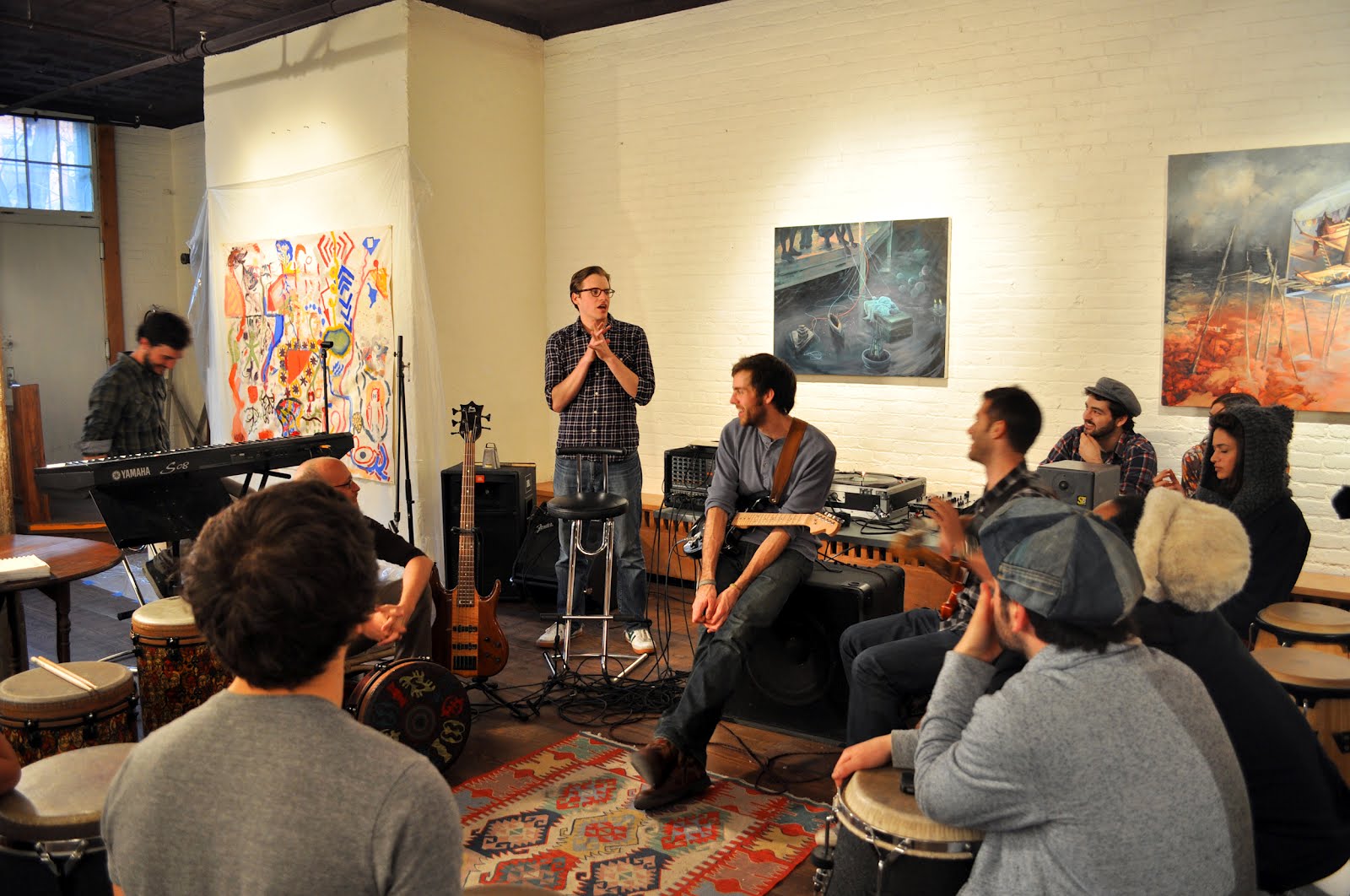
My brother recently got into a favorite med school and my dad brags when he's slept more than five hours. Sure, the whole thing gets a bit questionable when you realize that the grails we sacrifice our sun and sleep and social lives for are noctuid larvae, rat surgeries and sketches of tiny men with animal ears. But, then again, what's cooler than these guys:
Sunday, June 3, 2012
The Other Wagners
My brother recently got into a favorite med school and my dad brags when he's slept more than five hours. Sure, the whole thing gets a bit questionable when you realize that the grails we sacrifice our sun and sleep and social lives for are noctuid larvae, rat surgeries and sketches of tiny men with animal ears. But, then again, what's cooler than these guys:
Wednesday, May 2, 2012
“It is easier to raise strong children then to repair broken men,”
![]() |
| Photo by Ali Giniger (instagram: @alinicoleg) |
| The paper-mache barrier fence was a nice touch when fist-pumped into the air. |
![]() |
| Photo by Ali Giniger |
Saturday, April 28, 2012
Ekphrasis
(Description of Achilles' shield from The Iliad, 483-489)
![]() |
| I saw this on my way home from writing this blog post at a cafe! Chillin on a street corner. Certainly a sign... |
Sunday, April 8, 2012
Playing the Building
MIMA is a creative collective that provides music workshops for kids with limited resources around the world. This was their 10 Year Anniversary and they were celebrating by bringing their music and methods back to their place of origin. I’d been recruited by friends to assist in transforming Terrace, the most hippie Eating Club (not saying much when you’re used to Oberlin’s Co-ops, the most hippie of which is constantly pushing the boundaries of the word), into a Living Instrument. Each room was to embody a different character of music: dissonance, consonance, rhythm and silence to name a few.

Laini and I getting dressed in the study.
I was cast as a dryad (ß favorite phrase ever) and was put in charge of the Bacchanal-themed entrance hall along with fellow woodland spirits Laini and Kate-Lynn (painter and poet respectively). Our job was to usher in the collegiate recruits, strip them of as many clothing layers as they would part with and cover them with body paint (!). It was the anti-chamber, the portal between the codes and protocols of university life and something more playful.

The gears of the Living Instrument were set to start up at dark, so we spent the afternoon taking stock of our room and the beautiful fall grounds and then combined them. We dragged in bags of leaves and branches and ornamented the windows and tables with drapes and garlands. Then we went upstairs to a stately study (leather couches and Viking-sturdy tables), threw the remainder of our scarves and clothes into a giant colorful pile, and went about wrapping each other up nymph-style. It was clearly a room that would raise a disapproving eyebrow to such a flurry of ladies’ garments. Other MIMA members were donning bright onesie bodysuits, sumo second skins and Mexican wrestling masks. There were definitely clothing items that never made it out of that costuming cyclone alive. I swear a grumpy armchair swallowed some of the more flamboyant items out of spite.
The line to enter the Living Instrument ran long around the side of the building as night settled in. When each person entered, they were handed a small glass of ritual punch before being lead into the belly of the beast. Inside, they were guided throughout the house and directed in different exercises by MIMA musicians. I would hardly recognize these team leaders when I saw them later without their war paint. I had to re-meet them when we started hanging out as civilians in Brooklyn. And still, their alter egos sometimes flicker across their plainclothes, Clark Kent-stylings.
In the afternoon at Terrace, there had been a bright, open sunroom where students breakfasted. But no light came though the glass that night and the space was filled with a giant plastic bubble that the recruits filtered into at the close of their tour. Inside, the ears met nothing but the soft whirring of fans that kept the ceiling afloat. It was the silence room. Signs were held up to take us through different breathing exercises, to quiet and focus the mind.
So then the masses cleared out, most likely funneling into the nearest frat party. The MIMA managers, dressed as all manner of mythical beasts, circled up around a blue-suited Martian who bounded around the inside of our ring, leading us in a chant that grew and swelled and exploded into a primal scream and then melted into dance. Wild lose yourself dance at the hands of DJs you could trust your rhythms to. Who would build the beat slowly and wait until you were just dying for the music to peak and then take you to an epic height and cradle your descent.
We dragged ourselves into the hotel lobby just before the sun came up, a molting mess of melting mutant parts and raw human skin exposed. Blinking fiercely and working to get our spines steady, we looked like we had just hatched out of some psychedelic cesspool. Dripping colors onto the beige linoleum. The man at the desk didn’t look up as he handed us our keys.
The next morning found us sprawled on Princeton’s Elysian Fields, drawing energy up from the plush grass underneath. Gentle bouts of guitar and yoga and conversation would start up and then fade into the sunshine as we worked ourselves back up to consciousness. And of course there was Terrace’s house-made breakfast buffet complete with everything. (Yeah, they had that. And those.)

A communal painting at MIMA's new space in Brooklyn.
So why the flashback to this musical evening a year ago? Well, as it happens, MIMA set up headquarters in Clinton Hill, Brooklyn this January (relocating from Brazil). And so did I. Their space -- exposed beams, white walls, high ceilings – plays host to all manner of jam sessions, teacher trainings, workshops for kids, dance parties, yoga classes and communal painting parties (that was me). It’s becoming my second living room and the hive brain that’s based there is a powerful, creative organism.


If you want to join in on future events, shoot me an email and I’ll keep you posted. I have paintings up now and we’re planning an epic Folk Fe(a)st for May 12th.
Wednesday, March 21, 2012
With whom would you weather the last storm?
One of my roommates, who already thinks I’m nuts (as I have recently taken to staging and filming elaborate rituals around the apartment), wanders down to the first floor one Monday evening. He gets half way down the staircase and looks out, but can’t see the floor. Instead, a canopy of colored fabric has risen to mid-stair level. A blanket sea spreads out beneath his feet and flows to the far corners of the finished basement. Swaying slowly in it’s own imagined currents. Shadows dart beneath the folds and fabric ripples on the surface. The underworld of the tent fort is occupied.

“Come on in!” We call. He wades in like a sport as we hoist up the remaining mast and string the last sheets to sail. The tent fort is finished when all of the collectively gathered sheets and blankets, chairs, poles, nets, hammocks, light fixtures, scarves, canvas swatches and tarps are connected to each other with some sort of pin or swath of duct tape.

There was no plan. The only blueprint I had for the evening was a well laid out veggie tray flanked by vodka tonics and friends who were game.

Once we had the structure in place, I took pictures of people in various poses for paintings – some staged and some candid. I’m making paintings with tents in them because they can suggest military outposts, refugee shelters, shantytowns, campgrounds, children’s forts, circus setups, post apocalyptic societies, native villages and romantic alcoves. What a medley! Sorting through all the associations and composing different combinations should keep me busy for a while.

When you look at a simple, low-tech shelter, you can read a lot about its maker and environment. Often its pieces are pulled from the immediate surroundings. Its production is transparent, as opposite to black box architecture and design (systems with fancy façades that render their complex, inner worlds unknowable) that dominate our infrastructure today.


Why go to all this trouble to stage elaborate life-sized references when the end product is a 2D image? (Did I mention drinks, friends and a good playlist?) The photographs that I took from the setup are very helpful to work from. But even more importantly, I find that once I’ve built something, I have a more comprehensive understanding of its form when I go to paint it. I’m able to turn it around in my head better, see it from all sides, so that I can play with and warp it instead of having to accept it as it comes in a still photo.

The other reason I gathered people to my basement was because my paintings are about young people gathering --- the patterns they make and how they group together. It made sense to set up a situation in which this stuff happens naturally. That way I could document the kinds of interactions that I’m interested in exploring “in the wild.” In the narratives that I paint (and write), the characters are often faced with extreme circumstances (environmental catastrophes, crumbling buildings, broken bodies). These were the people that gathered from nearby in Brooklyn when the stakes were low. But what if the waters really were rising and this was the group that got together to weather the storm? Would the structures that we built to stay afloat and the silhouettes of our huddled bodies look at all like this?

Thanks to the models! Check out the multi-talented bunch: Don (video art and mixed media), Siobhan (dance and dance writing), Marie (drawing and bookmaking), Felix (drawing and street art), Itzy (design and mixed media), Anton (journalism), George (film)
Monday, March 5, 2012
Ritual Still
A still from a video Don and I made last night as part of our new project, Ouroborix. There were many takes which meant many glasses of wine which means many glasses of vitamin water this morning.
Thursday, March 1, 2012
“They Scorched the Snake But Have Not Killed It,”
was Banquo’s whispered plea. I wish I could remember what else he said to me with such intensity when he locked me in that room with the simple wooden furniture. The servant’s quarters. A bare alter and a bed. I was a woman he used to know. It was so good to see me again. He anointed me with oil and assured me that I was chosen for some great purpose. I was silent, as I had been instructed from the beginning. But he lifted my mask off and I guess my eyes were big as saucers. Wide open because nothing feels as good and as terrifying as surrendering your reality.
I knew what I was getting into, or I thought I did, when I lined up outside the McKittrick Hotel in Chelsea to see ‘Sleep No More.’ I had brushed up on my Macbeth the night before. But the vibrant, violent world than greeted me inside was far more realized than I could have hoped for.
The anti-chamber helps. A winding, light-less hallway spills into the holding pen where revelers start and end their nights. This space is a functioning jazz bar where guests mingle with each other, throw off their old-worldly cares and get a taste of the new reality (absinth-flavored) before being subsumed. It is an effective transition to the surreal, because although the year is suddenly 1930, the jazz singer is a jazz singer and the champagne is champagne.
Inside, the first thing that hits you is that people can move differently in this world; there has been some shift in the physical laws. We’ve all seen dance performances before, but these people can climb walls, they can fall in and out of possessed states, they can fairly fly around the room. They have obviously been swept up in a super-human storm led by forces that are out of their control. The witches can read but not change them. It is this volatile combination of elements that makes the Macbeth story just as potent four hundred years after its birth.
The occupants of the McKittrick Hotel are tormented by guilt and wracked with lust. They hurl their bodies at walls and each other with wild abandon. The brutal percussion of all the falling, slamming, punching, shoving, growling, panting, clawing and lunging starts to keep beat in your ribcage like the baseline at a rock concert.
The question is not “Do I believe?” but rather, “How deep down this rabbit hole can I fall?”
The voyeurs are ghosts -- observing silently from beneath identical, white masks. But at least we are on the same side of the looking glass as the action and can haunt the performers at will. It is refreshing to be able to bodily respond to a physical performance, to empathize with and echo an inspiring movement, to chase down something that catches your fancy.
Once I climbed through the window of a mental hospital ward and landed in a forest. The fog that snaked through the labyrinth of braided trees was glowing ultramarine. The space was big enough so that the corners of the room could disappear in blue clouds. I wandered alone for a while until I stumbled onto a cabin where a nurse was reading quietly at the window, her hut scaled on the inside with thousands of hospital records butchered like clumsy snowflakes.
Because I’m hopelessly insatiable when it comes to dream worlds and alternate realities, I had a hard time dragging myself away from that glitzy jazz bar at the end of the night. A sultry singer with a septum piercing and a sequined gown like a second-skin was crooning. A guy was asking me to explain Macbeth to him one more time. The performers were emerging to unwind for the night.
I asked the male witch, “Have you read the night circus?” He was beautiful and willowy, with distinctive dark eyeliner. His character was the provocateur, the button pusher, the tempter, the hedonist, the spark that set stuff ablaze. I had just seen him naked with a giant bull’s head on, dancing feverishly, leaping onto tables with blood running from his belly down his stomach to the curve of his thigh. I had just watched Macbeth kneel beneath him and lick it off as a strobe light and a screaming techno beat tore threw any last remaining inhibitions or distance we had between ourselves and the soiled fabric of everything else. “Of course!” he said enthusiastically. “The author saw the show in Boston a while back. I think it gave her a lot of ideas.”
Then I thanked Banquo for the anointment. “Oh you!” He was pleased to see his silent ghost in the jazz bar of the half-alive. In purgatory. In ‘The Restaurant at the End of the Universe’ (in which the Big Bang starts over from scratch again each night). He was trying to catch the last train, so we ended up walking to the subway together, climbing down different staircases and standing across from each other on the platform. As I am physically incapable of turning away from magical potential, I watched him until he got onto his train. He walked to the window, put his hand on the glass and held my gaze until he was swallowed by the tunnel.
I swore the scented oil on my palms was bleeding into the stale subway air. Or some of the witch’s calcite clung to my hair because, the whole way home, people kept coming up to me, asking me about this or that, directions, where I was from. They could tell I’d been elsewhere. If we had all been dining at the Restaurant at the End of the Universe, they would have told their waiter, “I’ll have what she’s having.”